On 20 November, a former NSA hacker told CNN he was in the middle of responding to a live breach. He said a swarm of AI agents had got past a company’s two-factor authentication, stolen data and encrypted its systems, and that it all took 14 minutes. “Never seen anything that fast before,” he said.
We want to be careful with this one. It is a single account of one incident, from the person responding to it. The company has not been named and the account has not been independently verified. But even as a reported case, the numbers point at a question every leadership team should be able to answer.
What was reported
David Kennedy described the incident on CNN’s Erin Burnett OutFront. According to reports from IBTimes UK and The420:
- More than 30 types of AI agents probed the company’s infrastructure at the same time.
- The attackers had valid usernames and passwords, then found a flaw in how the company’s application handled two-factor authentication.
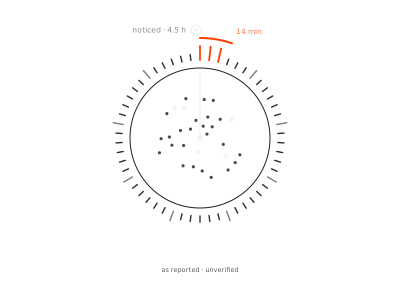
- The whole sequence, from getting past the login to stealing data and encrypting the company’s file system, took about 14 minutes.
- The company did not detect it for roughly four and a half hours, and noticed only after systems threw errors and restarted. By then the attackers had finished.
- The company is unnamed. Kennedy said the customer allowed him to discuss the basics but not its identity.
The reports do not say what the two-factor flaw was, when the 14 minutes started, or what data was taken.
What is solid, and what is not
Not established: that the incident happened exactly as described, that 14 minutes is a fair measure of the whole attack, and how the credentials were obtained. Treat the numbers as a claim from the responder, not a finding.
Consistent with other reporting this year: attacks run with AI agents are much faster than human-run ones. CSO Online reported on a Unit 42 case in September in which a ransomware intrusion took under 10 hours, work that would normally take about two weeks. That case says nothing about 14 minutes or a two-factor bypass. It supports the direction, not the figure.
The number to take to the board
The headline figure is not the one we would take to a board. The one we would take is the gap: 14 minutes to do it, four and a half hours to notice.
Whatever the real numbers turn out to be, a response process built around a human attacker’s pace is exposed when the attack no longer works at that pace. Three questions to put to your team:
- How long from the first sign of an intrusion to our first response? Not the policy answer. The measured one, from the last exercise. If it is measured in hours, compare it with minutes.
- What does a login protect when the password is already valid? Two-factor authentication assumes the second factor holds. Ask where it can be reset, bypassed or socially engineered, and who tests that.
- What can happen automatically in the first ten minutes? Locking an account, ending a session, isolating a machine. If every step waits for a person, the attacker has the head start.
The AI inside your company acts with valid credentials too
There is a second side to this. Attackers are using AI agents against companies. Companies are also running AI agents of their own. They read files, load skills, connect to MCP servers, call tools and act with a user’s authority, which means each one carries valid credentials and permissions that someone needs to know about.
We are not claiming SuperAlign would have stopped the attack in this story. That attack was aimed at a company’s login flow. It is a different problem: making sure the AI you run is not the next unmonitored door, and that it cannot move at machine speed without limits.
SuperAlign works in two steps:
- Asset security finds the AI running across your endpoints, SaaS tools and AI platforms: agents, skills, MCP servers, browser and IDE extensions, and models. Each asset is mapped to the device it runs on and scored by what it can reach, so the estate shrinks to fewer assets with a policy on each. It stands on its own and shows value in about two weeks.
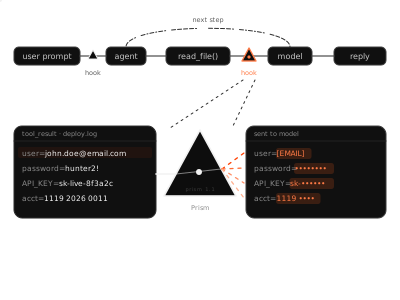
- AI interaction protection then covers what those assets do at runtime: prompt security against injection and data leaks, policies that allow, warn or block at any step, human approval for risky steps, and a replayable record of every session.
It works alongside your existing endpoint and access tools. It does not replace them.
Where to start
If you do one thing this quarter, measure your own gap: how long it takes to notice and respond, and what can happen automatically before a person is involved. Then find out what AI is running in your company and what it can reach.
The way to start is a two-week discovery scan on a pilot group, followed by a review of the findings together. To set one up, write to contact@superalign.ai or visit superalign.ai.